
16 November 2011
Awk-upy: Left Love and Shame
The latest issue of the Hypocrite Reader just went live with the theme "occupation." There are some interesting pieces (I'm personally a big fan of Debbie Hu's and Sam Feldman's) in it and one of my own. So by way of shameless self promotion here the introduction to mine. Also Occupy Elvis:


11 November 2011
The Open Letter to the Occupy Movement

I've been scarce on this blog for a few weeks. I've been busy dealing with Occupy Las Vegas, which is deeply problematic. I'm not going to air the dirty laundry here, not because I don't want to, but because I don't know how. More than being busy, engaging with this movement has been baffling and I've had enormous trouble coming to any analytical conclusions. My initial post about the history of the tactic was mostly just chronicling and name checking, which is easy but does little to move forward our understanding. I don't think that I'm alone in this bewildered speechlessness, and I think the awkwardness between the left and the occupy movement is in fact a crucial object for analysis.
07 November 2011
Politicians have principles too

Facing the Democrats in the age of Occupy
Part 2 of 2 | Part 1
Part 2 of 2 | Part 1
If the portrayal of the Democrats as corporate puppets is too simple,
then how can we understand their insouciance in the face of the opportunities
offered by the Occupy movement? The approach we’ve been developing on this
blog, I think, allows for a more complete explanation. Neoliberal ideas proved
appealing to Democrats not simply because they brought campaign contributions
along with them, but because up until 2008 they seemed to make sense of the
economy better than the progressive alternative and they demonstrated greater
efficacy when pursued as policy.
Compare the path of Chicago and Detroit under neoliberalism. Under
Fordism, both were thriving industrial manufacturing cities, but the
restructuring of the global economy in the 1970s and 1980s undid these
economic foundations. Chicago already had an important financial sector that
the city’s political and economic elites transformed into the basis of a new,
but deeply uneven, prosperity. Detroit had no such economic engine to fall
back on and was destroyed.
04 November 2011
Why won't the Democrats exploit Occupy?

Part 1 of 2 | Part 2
In general, politicians are first and foremost opportunists. That doesn’t mean they’re without principles or ideology, but it means they tend to be flexible and instrumental about how to accomplish their goals. So the Democrats’ response to the Occupy Wall Street movements is rather mystifying. National Democratic leaders, while claiming sympathy with the protesters, have by and large decided to allow the movement to wither rather than seeking to draw its energy into the election cycle (compare the Republican Party’s response to the Tea Party). At the local level, Democratic mayors – from the far corporate end of the spectrum (Emanuel) to the former-organizer end (Quan) – have been at the forefront of unleashing police repression on the occupations.
This is a stunning repudiation of political advantage. The latest New York Times poll, conducted October 19 to 24, once again demonstrated that the silent majority of our moment supports a liberal-Keynesian approach to the crisis.
27 October 2011
Blog Self-Critique concluded
This started out as a comment, a sort of anti-critique, on
Walker’s post, but as I looked at Walker’s post, I realized that the points
that I disagreed with were not actually specific to this post, but were more
general claims made over the course of this blog.
The conception of society that the blog tends to claim exists
in neoliberalism
The historical specificity of anti-Semitic populist
movements
22 October 2011
Soaring corporate profits presage disaster for corporations

This graph is nothing less than stunning. After-tax
corporate profits as a share of the economy have now skyrocketed far above any
level in the last fifty years.
Many people on the left view the profit surge thru the lens
of class war — that is, the rich are prosecuting a war against everyone else,
pillaging the wealth we all produce jointly and taking it for themselves alone.
The wits among us will respond that it’s not really a war when one side does
all the killing and the other side all the dying. Much of the outrage finally
finding expression in Occupy Wall Street and the other occupations that have
swept the country is based on this way of seeing things.
 |
| Source |
As this chart shows quite graphically, such a formulation
isn’t wrong. How else can we explain former Bank of America CEO John Thain’s notorious office renovation, which included two guest chairs for $87,000 and a
$1400 trash can? Or the market for $6400 luxury toilets? Or the regularity
of million-dollar+ birthday parties? All while millions of people, in
the US alone, go without food or shelter or healthcare on a daily basis?
So this understanding captures one facet of our society:
rich people are greedy bastards. But it misses a more fundamental dynamic of
capitalist life, so it remains a one-sided understanding. This leaves us incapable
of grasping the nature of the unfolding crisis of neoliberalism and understanding the tasks that will be necessary to overcome
it.
15 October 2011
Resurrection of the liberals?

12 October 2011
Blog Self-Critique
This started out as a comment, a sort of anti-critique, on
Walker’s post, but as I looked at Walker’s post, I realized that the points
that I disagreed with were not actually specific to this post, but were more
general claims made over the course of this blog. It extended too long for one post and so has become a number of shorter ones.
In this post I would like to address two issues, for the sake of
space but I will post other parts of this anti-critique over the course of a
week or two. Those themes are:
I. The opposition between working class and capitalist
II. The use of the category “working class identity politics”
08 October 2011
Is Occupy Wall Street progressive?

We can get a better feel for the occupiers’ position by
reading the “Declaration of the Occupation of Wall Street”, which was passed by consensus
at the occupation. Contrary to the impression left by slogans like “the 99
percent against the 1 percent” or the symbolism of occupying Wall Street, the
targets here are not restricted to bankers or finance capital or rich people.
It’s the power of large corporations in general, over all aspects of life, that
is opposed.
06 October 2011
The dysfunctions of neoliberalism: Productivity

In an earlier post, I put forward an outline of the
underlying causes of the crisis of neoliberalism in the United States. I argued
that, in order to maintain healthy profit levels, neoliberalism has required an
increasing level of exploitation of the workforce, leaving wages stagnant
despite increasing productivity. The outcome was a widening gap between the
output of the economy and the purchasing power of consumers, a gap that was for
many years bridged by rising levels of consumer and government debt. It was
only a matter of time, however, before this transparently unsustainable fix to
the insoluble contradictions of neoliberalism came crashing down, which it
finally did with the collapse of the housing bubble in 2008. Subsequent
attempts to revive the economy have failed to address any of the underlying dysfunctions of neoliberalism, and we now face either gradual or abrupt
economic decline — stagnation or renewed crisis.
Curiously, an earlier configuration of capitalism — that of
postwar Fordism — seems not to have suffered from this contradiction between
maintaining profits and paying workers enough to purchase the output of the
economy.
04 October 2011
#Occupy
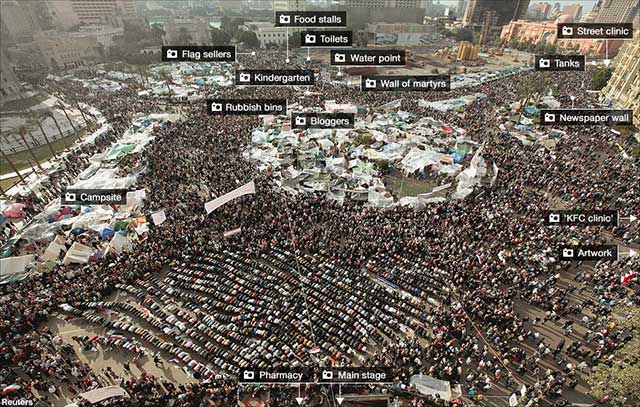
When I watched this video back in 2009 I lost hope for the "occupation movement." When anarchist grad students in California (I know that's not entirely accurate) took up the mantel I thought it was neat, but silly. Then Tahrir happened. Then Madison happened. Then Madrid happened. Then Occupy Wall Street happened. Then this happened. Then this happened. And this is about to happen. Now I'm confused.


30 September 2011
Political Sadness: Mourning Troy Davis

At 11:08pm EST on September 21st 2011 the State of Georgia killed Troy Davis. It was his fourth execution date and after a four hours reprieve by the US Supreme Court. This act marked the close of a beautiful chapter of struggle, thousands signed petitions, attended rallies, wrote letters to elected officials, made phone calls to public officers, or followed news of the case closely. None of this could stop the iron will of the State of Georgia in what at times felt like a calculated attempt to prove activists their efforts were futile. Ann Coulter's analysis perhaps provides the best metaphor. She equated Troy Davis with a baby seal, one more thing that bleeding heart liberals attempt to save through "hysterical crying." If the state can bend to such collective displays of affect that where's it's authority. At 11:08pm EST on September 21st 2011 the State of Georgia turned to those hysterical thousands and said, "no you can't." It announced the impotence of collective action and proclaimed the glory of the established forms of authority.
Such an act and the affects it induced, grief, outrage, fear, hopelessness, were not mere private drama. They were and are being experienced collectively. For those who took Davis' struggle as their own these emotions are felt with and supported by the thousands in the movement. Our affect divides us from them, they articulate an indisputable wrong, they are felt arm-in-arm with our comrades who struggled. All this means one thing: they are political.
22 September 2011
Gáspár Miklós Tamás at University of Illinois at Chicago Monday, September 26, 2-4 PM
Gáspár Miklós Tamás: “The Failure of Liberal Democracy in Eastern Europe and Everywhere Else”
Monday, September 26, 2-4 PM • 2028 University Hall • University of Illinois at Chicago
A leading dissident under Communism, liberal parliamentarian and head of the Institute of Philosophy of the Hungarian Academy of Sciences in the early 1990s, and now a dissident once again, Gáspár Miklós Tamás is one of the most important thinkers of the post-Soviet era. He has held visiting professorships at several US universities, and his work has been translated into fourteen languages.
MRZ: “Which traditions of Marxism are you drawing on? Are there any contemporary writers or theories which you find especially useful, compelling, or relevant?”
GMT: “Several. Even when I was ideologically very remote from Marxism, I did not stop reading some of its literature. I was quite influenced by the early and middle work of Cornelius Castoriadis — I also knew him, an astonishing man — and Karl Korsch. Although I was personally close at one time to many people from the Lukács School, it is only now that I have read him with sustained attention. (His pupils have gone in the opposite direction, e.g., my erstwhile friend Agnes Heller has become a conservative with an increasingly strong Judaic interest, and a cold warrior après coup, who is bizarrely accusing her old friend and colleague, István Mészáros, author of Beyond Capital and guru to Hugo Chávez, of having been expelled from Canada as a Soviet agent — Mészáros is an 1956 political émigré, an emeritus professor at Sussex University with impeccable anti-Stalinist credentials.) I am an avid reader of operaismo and of pre-Empire Negri, and also at the opposite end, the Wertkritik school, in my view the best heirs to Critical Theory (Hans-Georg Backhaus, Helmut Reichelt, Michael Heinrich, but also the unruly genius, Robert Kurz, and the “cult” periodicals of this tendency, Krisis, Streifzüge, Exit!) as well as authors like Robert Brenner, Ellen Meiksins Wood, David Harvey, Michael Lebowitz, and various Marxists working in England too numerous to mention. The greatest impact came, however, from Moishe Postone’s magnum opus. These choices may seem eclectic, but I don’t belong to any of these currents. I am working on my own stuff and I am learning from all of them.”
21 September 2011
Summing it all up...
Response to “Apprehensions of the social”, part 4 of 4
By Chris Wright
We are after all confronted with a problem. The
Enlightenment linked citizenship with humanity and such is the world we lived
in. As a result, struggles to be treated as fully human tended to be struggles
to be fully incorporated as citizens. (Workers, despite what the revolutionaries
generally wanted, and in all but a few instances, and there usually under the
least democratic conditions, generally wanted to extend their rights as human
beings in this society.) And in turn the extension of citizenship to people
without wealth increasingly created a pressure (exerted through social
struggles and also at times as part of the rationalization of conditions of
accumulation) to provide a minimum of life’s needs to every citizen, hence
social welfare, public education, etc.
The workers’ movement, the civil rights
movement, the women’s movement, etc. have all sought to further merge citizen
and bourgeois, but the split itself cannot be overcome in this society, only
through its revolutionary overcoming.
15 September 2011
Inspiration from Bourgeois Economists: Guest Post
We’ve been doing some guest posts these days. It’s a way to broaden the conversation and to reduce our personally necessary labor time in producing this blog .... if only we could make a Critical Theory chat bot to reduce socially necessary labor time. Insurrectionists are way ahead of us on this.
Frank and Earl have each invited me to write something for this blog. I want to introduce two pieces relevant to your conversation. They have a few common features: (1) they are novel proposals — not New Deal nostalgia, nor the ‘capitalism with a conscience’ of fair trade and farmers markets, nor the Labor Party’s ‘Clause IV’ and central planning; (2) they are roughly compatible with the orientation to social theory shared by this blog’s contributors; (3) they are both formulated by unapologetic pro-market economists.
~~~~
Frank and Earl have each invited me to write something for this blog. I want to introduce two pieces relevant to your conversation. They have a few common features: (1) they are novel proposals — not New Deal nostalgia, nor the ‘capitalism with a conscience’ of fair trade and farmers markets, nor the Labor Party’s ‘Clause IV’ and central planning; (2) they are roughly compatible with the orientation to social theory shared by this blog’s contributors; (3) they are both formulated by unapologetic pro-market economists.
Subscribe to:
Posts (Atom)