If we don’t go global, we can’t win.
Consider, for example, recent developments in South Korea around temporary employment
(covered here at
the Financial Times, behind a paywall). The rise of temp work in the US and other developed countries is symptomatic of neoliberalism. And as with other neoliberal trends, it is intensifying as the neoliberal economy breaks down. We might be familiar with hand-wringing on the subject in popular press in the US, but it is a global phenomenon (see also France, Germany, Japan, etc.).
South Korea has been hit especially hard by this trend, and has one of the highest rates of temp employment in the OECD, but it is now reversing the trend, thanks to some of the most militant labor unions in the world. Led by temporary workers, unions have taken up the cause of ending temp employment. Sustained
labor unrest has resulted in billions of dollars in losses for major
corporations, and tens of thousands of temp workers at Hyundai and other major corporations have been granted permanent
status (or other benefits and contract improvements in lieu of permanent
status).
Showing posts with label Forms of resistance and overcoming. Show all posts
19 August 2013
08 January 2013
Labor Roundup: The Strike in an Age of Austerity, part I
Permanent Crisis has featured some
excellent discussion on the relations between concrete social
mobilizations and the potential for the development of radical or
critical forms of consciousness (e.g., here
and here).
This post is an initial contribution to that line of analysis, and
takes as its object the evolving nature of the strike both as a
social phenomenon and as a specific tactic. I focus here mainly on
the recent return of old-school strike tactics and union militancy;
future posts will first address the role of the strike in the
radicalization of existing unions (e.g., CORE and the Chicago
Teachers Union), and then the strange things that happened under the aegis of the “general strike” during the Occupy mobilizations (see
here).
As has been extensively documented on
this blog and elsewhere, the massive financial collapse that hit the
core of the capitalist global economy in the autumn of 2008 kicked
off what could turn out to be the terminal crisis of neoliberalism.
The intervening four years between then and now has seen the gradual
onset of a deep recession of global scope, forcing people all over
the world to endure prolonged unemployment, slashed wages, the
scaling back or elimination of vital public services, and, in the
United States, the renewal of a deeply reactionary, nationally
coordinated program to destroy the last ramparts of organized labor
through an attack on public employees. Thus far, all the major
political parties of the European Union, as well as the Republican
and Democratic parties in the U.S., have marched in lockstep in their
support for and imposition of these draconian economic measures,
which they see as necessary for propping up an economic system that
is clearly
failing.
The broad bipartisan support for these programs across the board,
along with a still relatively scarce supply of credit – the main
vehicle of economic growth under neoliberalism – suggests that the
“austerity
state” is here to stay for the foreseeable future.
05 January 2013
Casting off the supply chains
On November 24 more than one hundred people were burned alive in the Tazreen garment factory fire in Bangladesh. This was not a tragedy but a crime. The factory did not meet safety standards, and there are reports that managers ordered workers to return to work when alarms were first heard so as not to lose money. It is known that the factory was producing clothing for Walmart and that Walmart had shortly before blocked a move to improve safety in Bangladeshi factories on the grounds of cost. Meanwhile the factory owners have offered compensation to the families of the killed workers at $1,230. Bangladeshi workers have responded with rallies and demands for improvements in safety and compensation in the industry.
Those responsible will of course deny that this is a crime. The factory owners have invoked the strictures of global competition and a lack of state support to justify their inability to maintain a safe workplace. Walmart has distanced itself from the factory, which was merely an outlier with poor management. They claim that a supplier was sending work there against the company’s directions, despite the fact that Walmart’s extensive knowledge, coordination, and influence over its global supply system is well known.
These positions are united in claiming that the fire was a tragedy after all, the result of personal irresponsibility or ‘bad apple’ factory owners who don’t live up to otherwise high standards for production. In doing so, they deny or obscure the fact that the global production system is just that, a unified system that has already embraced all workers and consumers into a semi-rational whole designed to create growth. It seems obvious that this is so, that for hundreds of years the fortunes of workers have been tied to the fluctuations of global markets whose effects national governments could only moderate but could never control. But it is also true that this global system embraces not just the factories operating within legal requirements but all of the various ways in which labor is sweated and money is turned into profit rather than investments in safety. It is a system that in the course of its normal functioning courts the mass death of workers and assigns a dollar figure to their lives.
So how has the movement against Walmart in the US reacted to the factory fire in Bangladesh? This question has a profound importance not only for the direction of labor struggles across the globe, but also our collective capacity to establish standards of acceptable ways for humans to live and work. The situation is ambiguous, with both progressive and regressive possibilities.
Those responsible will of course deny that this is a crime. The factory owners have invoked the strictures of global competition and a lack of state support to justify their inability to maintain a safe workplace. Walmart has distanced itself from the factory, which was merely an outlier with poor management. They claim that a supplier was sending work there against the company’s directions, despite the fact that Walmart’s extensive knowledge, coordination, and influence over its global supply system is well known.
These positions are united in claiming that the fire was a tragedy after all, the result of personal irresponsibility or ‘bad apple’ factory owners who don’t live up to otherwise high standards for production. In doing so, they deny or obscure the fact that the global production system is just that, a unified system that has already embraced all workers and consumers into a semi-rational whole designed to create growth. It seems obvious that this is so, that for hundreds of years the fortunes of workers have been tied to the fluctuations of global markets whose effects national governments could only moderate but could never control. But it is also true that this global system embraces not just the factories operating within legal requirements but all of the various ways in which labor is sweated and money is turned into profit rather than investments in safety. It is a system that in the course of its normal functioning courts the mass death of workers and assigns a dollar figure to their lives.
So how has the movement against Walmart in the US reacted to the factory fire in Bangladesh? This question has a profound importance not only for the direction of labor struggles across the globe, but also our collective capacity to establish standards of acceptable ways for humans to live and work. The situation is ambiguous, with both progressive and regressive possibilities.
24 February 2012
Critical(?) Subjectivities: The Greenhorns Part 1

I want to add a different, if perhaps less rigorous (in so far as it takes up the ephemeral), perspective to the conversation. It seems that one issue that has been recurrent through our conversation is current forms of subjectivity and whether they are or not adequate to an overcoming of capitalism, or to a new, more humane regime of accumulation that could better cultivate the conditions for a positive social (as opposed to dystopian asocial) overcoming. But we’ve been debating this issue without much attention to specific current expressions of subjectivity. To begin to fill this lacuna I offer below a close reading of one social movement. I offer my reading less as a definitive statement than as a critically attuned ethnography. It should also be noted that I did absolutely no traditional “reporting.” All the analysis is derived from promotional materials available on the web. Why talk to someone when you can assume they mean what they say?
The object of study is a group I mentioned in a December comment, the Greenhorns, a young farmers’ activist organization. These are not your mom and dad’s farmers. Emerging out of the Berkeley local food movement and now based in the Hudson Valley (elite locales within the foodie world), these are progressive neophytes plugged into social media, producing something that is as much a cultural project as an agricultural one. They eschew hierarchy in a fashion similar to that of the Occupy Movement, and also like Occupy seek to spread in the imitative fashion of a “meme.” Part information-provider, coalition-builder, and social event-organizer, the Greenhorns clearly express the lifestyle politics we’ve come to expect from neoliberalism. The question is, are they, could they be, something more? For while the triumph of lifestyle politics such as this, which advocates non-industrial agriculture, employment, and food for all could very well lead to more a more humane regime of accumulation, it is less clear, but still worth wondering, if it could also point beyond it.
17 February 2012
The rise and fall of national capital
The threat of a new nationalism (1)
In a previous
post, I worried that left populists would prosecute a war against all of
neoliberalism’s hegemonic social forms, neglecting the progressive side of
neoliberalism and sabotaging the chance for real progress. This may have struck
some readers as counterintuitive: those of us pursuing a vision of human
equality, solidarity, and true freedom are not used to thinking about
neoliberalism as progressive in any way. The rapacity of economic elites freed from all constraints; skyrocketing
inequality reshaping work, politics, and culture so that increasingly we are
all reconstituted as servants or dependents of the rich; whole populations rendered
unsuitable for participation in mainstream life by the economic disintegration
of their social ecology; accelerating environmental degradation; intensifying
exploitation – these are our associations with neoliberalism.
But neoliberalism is (or was) a social totality: all the dominant forms
of the last thirty years were components of neoliberalism as a coherent system.
That includes progressive (but not unproblematic) impulses like gender
equality, multiculturalism, and skepticism of authority. Because the crisis of
neoliberalism has manifested itself primarily in the economic realm, and these
forms of consciousness have no clear connection to the economy, they are for
the moment secure (what comes after neoliberalism will, however, reshape them
– for better or worse). Under much greater immediate threat is one other
progressive side of neoliberalism: the erosion of the nation form.
Location:
Shanghai, China
07 February 2012
A Kinder, Gentler, More "Revolution-friendly" Regime of Accumulation?
“The object of our efforts is not “inequality” or “the one percent”, but the social totality and the revival of its animating dynamic on a new, more humane basis.” Walker, "Redistribution is not enough" (italics mine)
“Walker's program, though, is precisely to try and shape those new conditions of accumulation, which does require an active politics that seeks to mobilize rather than interiorize the critique of capital. If I recall correctly, when Walker first proposed that the pressing question was not the overcoming of capitalism, but re-establishing it on a more "humane" basis it was on two grounds: 1) it is unclear that the dissolution of capital under current objective and subjective conditions would lead to a more humane society and not our worst dystopian nightmare 2) that capitalism always tends towards crisis and that when "humane capitalism" did reach its crisis point, conditions would be more amenable for a positive overcoming.” AB, comments on the above.
“I think we can all agree (please correct me if I'm wrong) that popular subjectivity is generated by social conditions, and that present-day social conditions make socialism wildly implausible to the overwhelming majority of the world's population.
On that assumption, a Marxian strategy would aim at achieving social conditions that made the overcoming of capital seem a compelling answer to the insoluble problems posed by modern society.” Walker, additional comments on the above.
The above three quotes provide a succinct presentation of what seems like the predominant perspective on this blog. The goal, “try and shape those new conditions of accumulation” on a more "humane" basis” which also creates “social conditions that made(sic) the overcoming of capital seem a compelling answer to the insoluble problems posed by modern society”, has some very loaded presuppositions which I hope to bring out and unpack.
- The crisis that began in the 1970's can be encapsulated in the concept of Neo-Liberalism as a kind of “regime of accumulation” or maybe better a “regime of the crisis of accumulation previously known as Fordism”.
- Neo-Liberalism is on its last legs and a new regime of accumulation will automatically come into being, and it will either be more or less humane.
The crisis of valorization that crystallized in the 1970's has not ended. For a new period of valorization to begin we would need to see the destruction of even more capital, including human capital, and a degree of immiseration that would enable new capital, with a higher organic composition and new labor processes, to be implemented on a global scale. There are several strong indicators (and that is all I am referring to these as) that a new cycle of accumulation has not begun.
25 January 2012
The insignificance of billions of people
In a previous post, I argued that outside the three main
value complexes of the global economy – Europe, North America, and East Asia –
other parts of the world were essentially irrelevant to the immediate prospects
for the expansion (or contraction) of global capital, except for what might
happen in the commodities markets. The argument was both empirical – these
two-thirds of the global population produce only one-fourth of global output –
and conceptual: because the economic activity in these regions is small-scale,
fragmented, and technologically backward, they are poor platforms for the
accumulation of capital.
This was something of a provocation, because one of the
noteworthy features of the neoliberal age has been a fascination among many
critical and even many uncritical intellectuals with the peripheries and
margins of capitalist society. It has often been taken as a progressive
political act simply to pay attention to those parts of the world that are
economically, and so politically and culturally, insignificant. Simply recognizing
that these societies are insignificant is often considered unacceptable.
But their insignificance does not follow from racist or
colonialist prejudice (though the existence of these phenomena is certainly
bound up with it). Rather, it is a result of their marginality to the central
processes of modern global society, above all the production and circulation of
value. The inattention of the global media, the lack of representation in transnational
organizations, the absence of global influence for their cultural products: these
are all reflections of the real insignificance of peripheral countries as
measured by the necessarily hegemonic standards of capitalist society.
Location:
Shanghai, China
17 January 2012
The dangers of populism
The reigning metaphor deployed by all contemporary populism, whether of
the left or the right, is theft: the government is stealing our earnings, the
immigrants are stealing our jobs, the bankers are stealing our houses, the
Greeks are stealing our government reserves, the Chinese are stealing our
factories.
It’s no surprise that a popular subjectivity conditioned by
neoliberalism should fixate on the illegitimate expropriation of value or its
stand-in as the source of grievance. The experience of neoliberal society has
made the free exchange of equivalent values the hegemonic ethical standard of
our time. (Today’s populism, then, needs to be distinguished from that
mobilized by Nixon through his racist silent majority. The resentment of the
early 1970s backlash was not a response to perceptions of theft but to the existential
challenge that the postwar white faced from blacks and student radicals. The
abundant polemics (e.g.) that trace an unbroken line from the racist silent majority to today’s
nativist and anti-tax right wing obscure this essential change.) For today’s
populists, if you’re convinced you’re doing what you’re “supposed to be doing”
– namely, working hard and taking responsibility for your own decisions – and
things still aren’t going right, it’s only natural to assume it’s because
someone is cheating you.
What is actually happening is not that some group of people is
violating the ethical order, but that the social order that gave rise to that
very ethic is itself breaking down.
Location:
Shanghai, China
18 December 2011
Redistribution is not enough
If the crisis of neoliberalism is a result of the collapse of the system of accumulation that
prevailed for the last thirty years, where exactly is the immediate problem?
We’ve already isolated productive investment (expanding value), robust demand
(realizing value), and efficient technology (circulating value) as the key
determinants of growth, so which of these has frozen up?
Demand is the obvious candidate.
Location:
Chicago, IL, USA
11 November 2011
The Open Letter to the Occupy Movement
I've been scarce on this blog for a few weeks. I've been busy dealing with Occupy Las Vegas, which is deeply problematic. I'm not going to air the dirty laundry here, not because I don't want to, but because I don't know how. More than being busy, engaging with this movement has been baffling and I've had enormous trouble coming to any analytical conclusions. My initial post about the history of the tactic was mostly just chronicling and name checking, which is easy but does little to move forward our understanding. I don't think that I'm alone in this bewildered speechlessness, and I think the awkwardness between the left and the occupy movement is in fact a crucial object for analysis.
07 November 2011
Politicians have principles too
Facing the Democrats in the age of Occupy
Part 2 of 2 | Part 1
If the portrayal of the Democrats as corporate puppets is too simple,
then how can we understand their insouciance in the face of the opportunities
offered by the Occupy movement? The approach we’ve been developing on this
blog, I think, allows for a more complete explanation. Neoliberal ideas proved
appealing to Democrats not simply because they brought campaign contributions
along with them, but because up until 2008 they seemed to make sense of the
economy better than the progressive alternative and they demonstrated greater
efficacy when pursued as policy.
Compare the path of Chicago and Detroit under neoliberalism. Under
Fordism, both were thriving industrial manufacturing cities, but the
restructuring of the global economy in the 1970s and 1980s undid these
economic foundations. Chicago already had an important financial sector that
the city’s political and economic elites transformed into the basis of a new,
but deeply uneven, prosperity. Detroit had no such economic engine to fall
back on and was destroyed.
Location:
Shanghai, China
04 November 2011
Why won't the Democrats exploit Occupy?
Facing the Democrats in the age of Occupy
Part 1 of 2 | Part 2
In general, politicians are first and foremost opportunists. That doesn’t mean they’re without principles or ideology, but it means they tend to be flexible and instrumental about how to accomplish their goals. So the Democrats’ response to the Occupy Wall Street movements is rather mystifying. National Democratic leaders, while claiming sympathy with the protesters, have by and large decided to allow the movement to wither rather than seeking to draw its energy into the election cycle (compare the Republican Party’s response to the Tea Party). At the local level, Democratic mayors – from the far corporate end of the spectrum (Emanuel) to the former-organizer end (Quan) – have been at the forefront of unleashing police repression on the occupations.
Part 1 of 2 | Part 2
In general, politicians are first and foremost opportunists. That doesn’t mean they’re without principles or ideology, but it means they tend to be flexible and instrumental about how to accomplish their goals. So the Democrats’ response to the Occupy Wall Street movements is rather mystifying. National Democratic leaders, while claiming sympathy with the protesters, have by and large decided to allow the movement to wither rather than seeking to draw its energy into the election cycle (compare the Republican Party’s response to the Tea Party). At the local level, Democratic mayors – from the far corporate end of the spectrum (Emanuel) to the former-organizer end (Quan) – have been at the forefront of unleashing police repression on the occupations.
This is a stunning repudiation of political advantage. The latest New York Times poll, conducted October 19 to 24, once again demonstrated that the silent majority of our moment supports a liberal-Keynesian approach to the crisis.
Location:
Shanghai, China
22 October 2011
Soaring corporate profits presage disaster for corporations
This graph is nothing less than stunning. After-tax
corporate profits as a share of the economy have now skyrocketed far above any
level in the last fifty years.
Many people on the left view the profit surge thru the lens
of class war — that is, the rich are prosecuting a war against everyone else,
pillaging the wealth we all produce jointly and taking it for themselves alone.
The wits among us will respond that it’s not really a war when one side does
all the killing and the other side all the dying. Much of the outrage finally
finding expression in Occupy Wall Street and the other occupations that have
swept the country is based on this way of seeing things.
![]() |
| Source |
As this chart shows quite graphically, such a formulation
isn’t wrong. How else can we explain former Bank of America CEO John Thain’s notorious office renovation, which included two guest chairs for $87,000 and a
$1400 trash can? Or the market for $6400 luxury toilets? Or the regularity
of million-dollar+ birthday parties? All while millions of people, in
the US alone, go without food or shelter or healthcare on a daily basis?
So this understanding captures one facet of our society:
rich people are greedy bastards. But it misses a more fundamental dynamic of
capitalist life, so it remains a one-sided understanding. This leaves us incapable
of grasping the nature of the unfolding crisis of neoliberalism and understanding the tasks that will be necessary to overcome
it.
15 October 2011
Resurrection of the liberals?
Two polls that have come out in the last couple days give us a snapshot
of where Americans stand on some of the issues we’ve been discussing here. They demonstrate the broad outlines of two very different popular constituencies:
those that have been mobilized by the Tea Party and Republican Party operatives
and funders organizing it, and those that are sympathetic to Occupy Wall Street
and a broadly liberal-Keynesian response to the crisis. The Democratic Party
has chosen not to mobilize the second (larger) group, and the efforts of unions
and community groups have either been too limited or simply ineffective. This
is the “silent majority” of our time. Could it play a historical role analogous
to that of Nixon’s reactionary silent majority, providing the popular basis for
a politics capable of overcoming the crisis?
Location:
Shanghai, China
08 October 2011
Is Occupy Wall Street progressive?
We got a good debate going in Earl’s last post on the
limitations and possibilities of the Occupy Wall Street movement. A lot of
attention rightly focused on the inadequacy of the critique embodied by the
protesters, I won’t take issue there. The question I want to raise is whether this is a force we should work with or not, which is a very different question.
We can get a better feel for the occupiers’ position by
reading the “Declaration of the Occupation of Wall Street”, which was passed by consensus
at the occupation. Contrary to the impression left by slogans like “the 99
percent against the 1 percent” or the symbolism of occupying Wall Street, the
targets here are not restricted to bankers or finance capital or rich people.
It’s the power of large corporations in general, over all aspects of life, that
is opposed.
Location:
Shanghai, China
04 October 2011
#Occupy
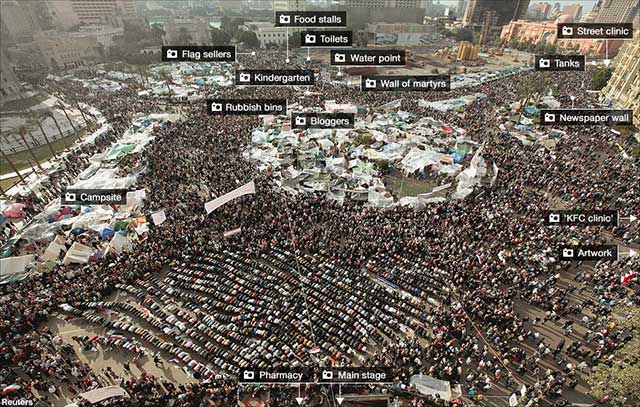
When I watched this video back in 2009 I lost hope for the "occupation movement." When anarchist grad students in California (I know that's not entirely accurate) took up the mantel I thought it was neat, but silly. Then Tahrir happened. Then Madison happened. Then Madrid happened. Then Occupy Wall Street happened. Then this happened. Then this happened. And this is about to happen. Now I'm confused.
30 September 2011
Political Sadness: Mourning Troy Davis

At 11:08pm EST on September 21st 2011 the State of Georgia killed Troy Davis. It was his fourth execution date and after a four hours reprieve by the US Supreme Court. This act marked the close of a beautiful chapter of struggle, thousands signed petitions, attended rallies, wrote letters to elected officials, made phone calls to public officers, or followed news of the case closely. None of this could stop the iron will of the State of Georgia in what at times felt like a calculated attempt to prove activists their efforts were futile. Ann Coulter's analysis perhaps provides the best metaphor. She equated Troy Davis with a baby seal, one more thing that bleeding heart liberals attempt to save through "hysterical crying." If the state can bend to such collective displays of affect that where's it's authority. At 11:08pm EST on September 21st 2011 the State of Georgia turned to those hysterical thousands and said, "no you can't." It announced the impotence of collective action and proclaimed the glory of the established forms of authority.
Such an act and the affects it induced, grief, outrage, fear, hopelessness, were not mere private drama. They were and are being experienced collectively. For those who took Davis' struggle as their own these emotions are felt with and supported by the thousands in the movement. Our affect divides us from them, they articulate an indisputable wrong, they are felt arm-in-arm with our comrades who struggled. All this means one thing: they are political.
21 September 2011
Summing it all up...
Response to “Apprehensions of the social”, part 4 of 4
By Chris Wright
We are after all confronted with a problem. The
Enlightenment linked citizenship with humanity and such is the world we lived
in. As a result, struggles to be treated as fully human tended to be struggles
to be fully incorporated as citizens. (Workers, despite what the revolutionaries
generally wanted, and in all but a few instances, and there usually under the
least democratic conditions, generally wanted to extend their rights as human
beings in this society.) And in turn the extension of citizenship to people
without wealth increasingly created a pressure (exerted through social
struggles and also at times as part of the rationalization of conditions of
accumulation) to provide a minimum of life’s needs to every citizen, hence
social welfare, public education, etc.
The workers’ movement, the civil rights
movement, the women’s movement, etc. have all sought to further merge citizen
and bourgeois, but the split itself cannot be overcome in this society, only
through its revolutionary overcoming.
02 September 2011
Demonize the banks
It has been my argument thus far that the illusion of continued global growth is primarily a product of the numerous speculative bubbles that were inflated as a result of the the main response to the crash of 2008, namely a massive injection of liquidity into the global economy. In the US and Europe this primarily took the form of no-strings bank bailouts. The US emerged from the bailouts seemingly unscathed economically (tho not politically) as the banks, having inflated new bubbles, were able to pay back the government; European countries like Iceland and Ireland, having shifted the crushing liabilities of the banks onto the much smaller base of their taxpayers, were economically devastated.
At the time there was an outburst of popular anger against the banks as the collapse of enormous real estate bubbles in the US, UK, Ireland, Spain, and elsewhere crushed millions of lenders while the bankers who had profited so ostentatiously by inflating the bubble were rescued without consequences. Some attempts were made to organize this discontent, one of which I was involved with, but these were notable principally for their failure to galvanize discontent. If any further evidence were needed, this showed conclusively that existing techniques of mobilizing a progressive constituency are hopelessly out of step with the times (discussion here and here).
Location:
Chicago, IL, USA
26 August 2011
“SCAB!” Spontaneity and Organization on the Verizon Picket line
The strike is over! This was the largest US strike in four years and seems to be a victory. But it would be a mistake not to learn lessons from it and imagine that this was simply a good strike, and good strikes win. We must draw out the peculiarities of the strike within the larger historical context and use this to raise and push forward important questions about the larger trajectory past capitalism.
The most remarkable images of this strike came from the picket lines, where members of CWA, IBEW, their families and allies taunted, harassed and at times possibly assaulted scabs (for more stories see this Labor Notes article).
Subscribe to:
Posts (Atom)